
Crypto investors today have several ways to earn potential returns on their digital assets, each with varying levels of complexity and risk. This guide provides a high-level comparison between three commonly used mechanisms: DUO, decentralised finance (DeFi) protocols, and staking. It is intended to help you understand their key differences, how they work, and the important factors to consider before participating.
- Simplicity: The DUO product is designed for accessibility, allowing users to commit digital assets through a user-friendly interface. While the process is streamlined, DUO remains a financial product that may not be appropriate for all investors, especially those unfamiliar with crypto-asset risks.
- Fixed returns: DUO offers a pre-defined rate of return if held to maturity. This is not a guarantee of overall profitability. The final value of the assets you receive may be higher or lower than your initial capital due to price fluctuations. Past performance does not guarantee future results.
- Short-Term Commitment: DUOs offer short-term investment options with durations ranging from 12 hours to 7 days. You can choose the term that best fits your strategy and risk appetite. At maturity, both your initial capital and any applicable reward are returned.
- Asset Outcome Flexibility: Returns may be paid in either the original or counter asset, depending on market conditions during the term. This means the value of your returned assets may differ significantly from your initial investment.
Important: DUO carries risk and may not be suitable for all investors. Your return is fixed, but the value of the assets received may fluctuate. As with all crypto-asset products, you may lose some or all of your investment. Please ensure you understand the risks before investing.
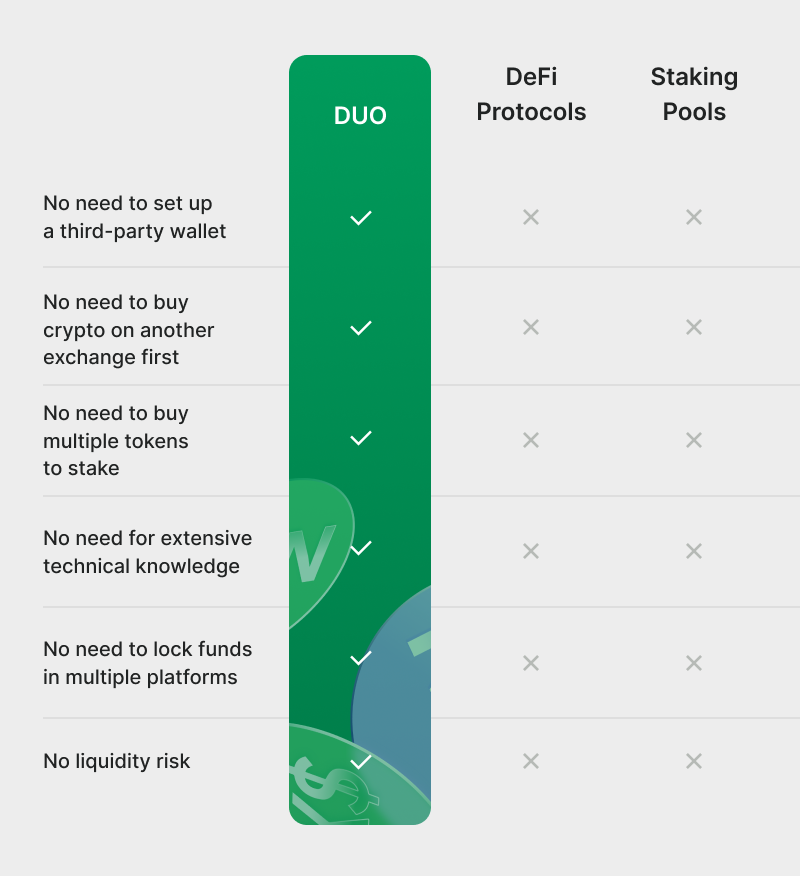
The Wirex DUO product may appeal to those seeking short-term exposure to potential yield opportunities in crypto markets. It offers a fixed return structure with simple access through the Wirex app. However, users must be aware that DUO carries significant risks, including the possibility of capital loss and asset conversion at maturity.
Always assess your risk tolerance and ensure you fully understand the product before committing funds.